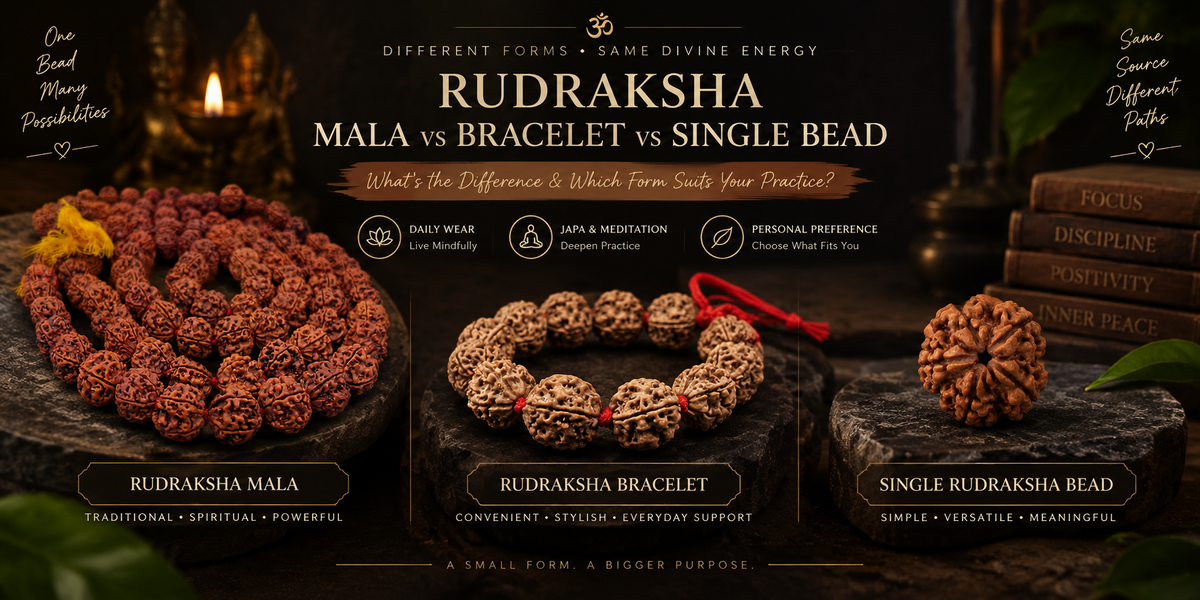
Rudraksha Mala vs Bracelet vs Single Bead
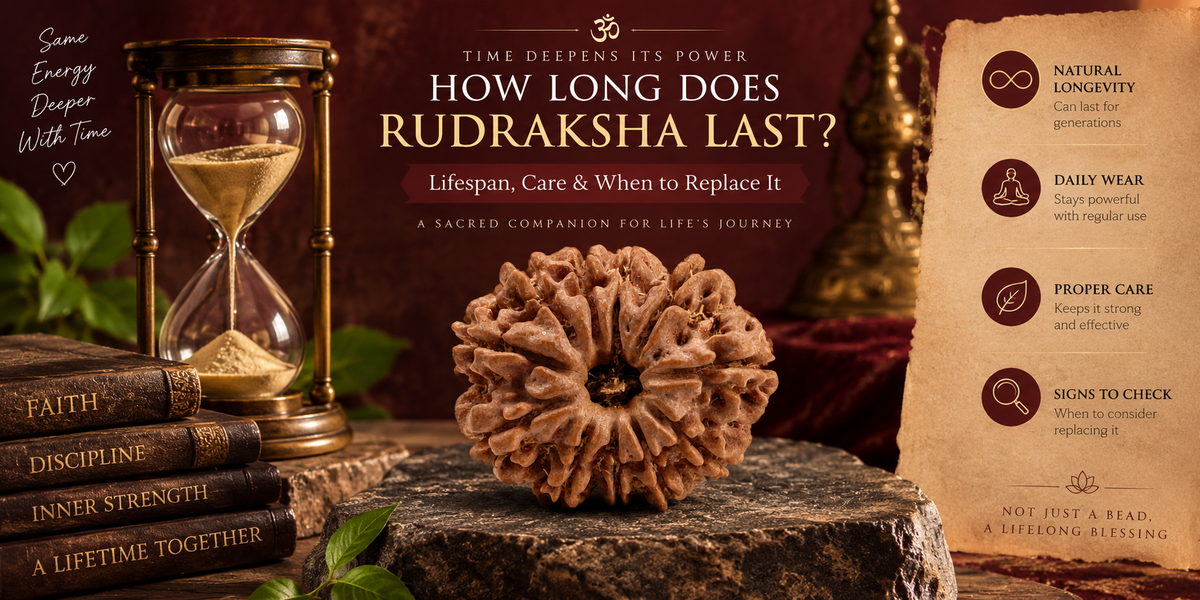
Quick answer: Rudraksha does not have a fixed expiry date. A well-maintained natural bead can remain usable for many years, but its lifespan depends on its condition, daily use and care. In a mala or bracelet, the thread, elastic or fittings may need replacing while the beads are still in good condition.
If your Rudraksha has become darker or its thread has broken, that does not necessarily mean you need a new bead. Start by checking the bead itself: is it firm, intact and securely held?
How Many Years Does Rudraksha Last?
There is no single number that applies to every Rudraksha. A bead worn daily through hot, humid weather faces different conditions from one used occasionally for mantra japa and stored carefully afterwards.
Its starting condition matters too. An intact bead with a sound drilled hole is different from one that already has a deep crack or damaged surface.
Rather than replacing Rudraksha after a set number of years, check its condition from time to time. Age alone is not a useful reason to stop wearing an otherwise intact bead.
Be cautious of a guaranteed lifespan such as 20, 50 or 100 years. No seller can predict exactly how an individual natural bead will age in your care.
Is Darkening a Sign That Rudraksha Needs Replacing?
A Rudraksha can look darker after regular handling. Skin oils, dust and any oil used during maintenance can change its surface appearance.
Colour alone is not enough to judge whether it is damaged. Look more closely at the grooves, raised ridges and drilled hole.
An older bead may look well used and still be suitable for wearing. On the other hand, a bead that looks relatively new may have a crack that needs attention.
The following comparison can help you decide what to check:
| What you notice | What to do |
|---|---|
| Darker colour without other visible damage | Check for surface buildup; replacement is not automatically needed |
| Slight smoothing of raised ridges | Inspect the bead for cracks and wear around the hole |
| Frayed thread or loose knots | Restring the mala before the thread breaks |
| Tarnished silver fittings | Check and clean the fittings using a method suitable for the setting |
| A deep or widening crack | Stop daily wear and have the bead assessed |
| Splitting, crumbling or a badly damaged hole | Consider retiring or replacing the bead |
| Unusual growth or a persistent musty smell | Set it aside and seek care advice before wearing it again |
What Can Shorten the Life of Rudraksha?
Daily handling is only part of the picture. How you bathe, store and protect the bead also matters.
Repeated Contact With Toiletries
Soap, shampoo, perfume and cleaning products can leave residue in the grooves. Removing Rudraksha before bathing with toiletries helps avoid this buildup.
Our guide on wearing Rudraksha during a bath explains the practical care considerations.
Leaving It Damp
A brief splash of clean water is different from putting a wet mala into a closed pouch. Moisture can remain around the beads, knots and fittings, especially during humid weather.
If it gets wet, wipe away excess moisture and let the complete piece dry before storing it. Read Can Rudraksha Get Wet? for more detail.
Rough Handling
A hard fall, pressure on a large bead or a sharp pull on a mala can damage the bead or its setting. Remove it for activities where it is likely to be crushed, caught or pulled.
Unsuitable Cleaning
Boiling water, hard brushes, sharp tools and jewellery-cleaning chemicals are unnecessary for routine bead care. Silver fittings may need a different cleaning method from the Rudraksha they surround.
The Thread May Wear Out Before the Beads
When a mala becomes loose or breaks, inspect the beads before deciding to replace the whole piece.
Thread can fray, elastic can stretch and knots can loosen through use. If the beads remain intact, restringing may be all that is needed.
Check around the Guru bead, clasp and drilled holes, where rubbing or tension may be easier to notice. There is no need to wait until the thread snaps and the beads scatter.
For the traditional structure and use of a japa mala, see our 108+1 Rudraksha Mala Guide.
Can You Wear a Cracked Rudraksha?
A natural groove can sometimes be mistaken for a crack. A photograph alone may also make it difficult to tell how deep a mark is.
If you notice a new line, check whether it is widening, whether the bead feels loose around it, and whether it reaches the drilled hole. Avoid pulling or bending the bead to test it.
Stop wearing a bead that is splitting, crumbling or no longer held securely. For a valuable Rudraksha, ask an experienced examiner to assess it before attempting a repair.
Glue may hold broken pieces together, but it does not restore the bead to its original condition.
Simple Habits That Help Preserve Rudraksha
A manageable routine is easier to follow than a complicated treatment schedule:
-
Keep perfume, shampoo and harsh cleaners away from the bead.
-
Gently remove dirt when it builds up.
-
Let the bead and thread dry fully after water exposure.
-
Store it in a clean, dry place where it will not be crushed.
-
Check knots, elastic, clasps and pendant fittings periodically.
-
Avoid repeated soaking, aggressive scrubbing or unnecessary oiling.
Oiling practices differ between suppliers and traditions. Follow the instructions appropriate to your bead and setting rather than applying oil every few days by habit.
For a complete cleaning routine, read How to Clean & Maintain Rudraksha.
Does Rudraksha Lose Its Spiritual Significance With Age?
Physical wear and spiritual significance are separate questions.
Rudraksha is associated with Lord Shiva and is used in devotional practice. Whether you perform puja, chant a mantra or follow a particular wearing routine depends on your tradition.
There is no scientifically established timetable for a bead’s claimed spiritual effects. You do not need to assume that it has become spiritually unusable simply because it is old.
If a bead breaks, address the physical damage without assuming that it predicts misfortune. You may keep or retire it respectfully according to the custom you follow.
Our Rudraksha Wearing Rules covers related questions about everyday use.
Buying a Replacement Rudraksha
Before buying another bead, confirm whether the problem is with the Rudraksha or only its thread or setting.
If replacement is needed, check clear photographs, dimensions, the bead’s visible condition and the laboratory documentation available with that particular product. A higher price does not guarantee a longer physical lifespan.
An old or dark appearance does not prove authenticity either. Our Rudraksha Certificate vs X-Ray Guide explains what these examinations can help you understand.
If you are unsure about the condition of a Mahadev Mala purchase, contact us with clear photographs of the affected area before deciding to replace it.
Frequently Asked Questions
Does Rudraksha expire?
Rudraksha does not have a fixed expiry date. Its condition and suitability for continued use matter more than the number of years since purchase.
Can Rudraksha last a lifetime?
A lifetime should not be promised for an individual natural bead. Care, handling, storage and its original condition all affect how long it remains usable.
Should I replace Rudraksha when its thread breaks?
Check the beads first. If they are intact, you may only need new thread or a repaired fitting.
Does sleeping with Rudraksha damage it?
It can place pressure on the bead or pull its thread during movement. If a large bead or delicate setting gets pressed beneath your body, removing it before bed is a practical choice.
Does a more expensive Rudraksha last longer?
Not necessarily. Price may reflect rarity, Mukhi, size or other characteristics. It does not remove the need for careful handling and maintenance.
What should I do with a broken Rudraksha?
Stop wearing it if it cannot be held securely. You can keep it respectfully in your puja space or ask your guru or priest about the retirement practice followed in your tradition.
A familiar Rudraksha does not need to look freshly purchased to remain useful. Check the bead, maintain its thread and setting, and pay attention to new damage rather than replacing it by the calendar.
Editorial note: Prepared and reviewed by Mahadev Mala based on traditional beliefs, established care practices and relevant reference sources. This guide provides general care information; it cannot assess the condition of an individual bead.
Disclaimer: Rudraksha is a natural spiritual product and an article of faith within Hindu and Vedic traditions. Spiritual and astrological associations are based on traditional beliefs and are not scientifically proven. Rudraksha does not diagnose, treat, cure or prevent disease. No medical, financial, academic, relationship or personal result is guaranteed. Laboratory reports and X-Ray examinations should be understood according to the scope and methods of the issuing laboratory. The lifespan of an individual bead varies with its original condition, handling, storage, construction and care.