Can Rudraksha Be Worn During Bath?
Quick answer: Some Rudraksha traditions permit wearing the bead during a plain, cool-water bath. For everyday bathing with soap, shampoo, conditioner or warm and hot water, Mahadev Mala recommends removing it first. Keep it somewhere clean and dry, then wear it again after bathing.
People often receive different answers because spiritual wearing practices and physical bead care are discussed together. A family may follow continuous Rudraksha wearing, while another may remove sacred beads before bathing.
Understanding that difference helps you respect your tradition and care for the Rudraksha you own.
Can Rudraksha Be Worn During Bath?
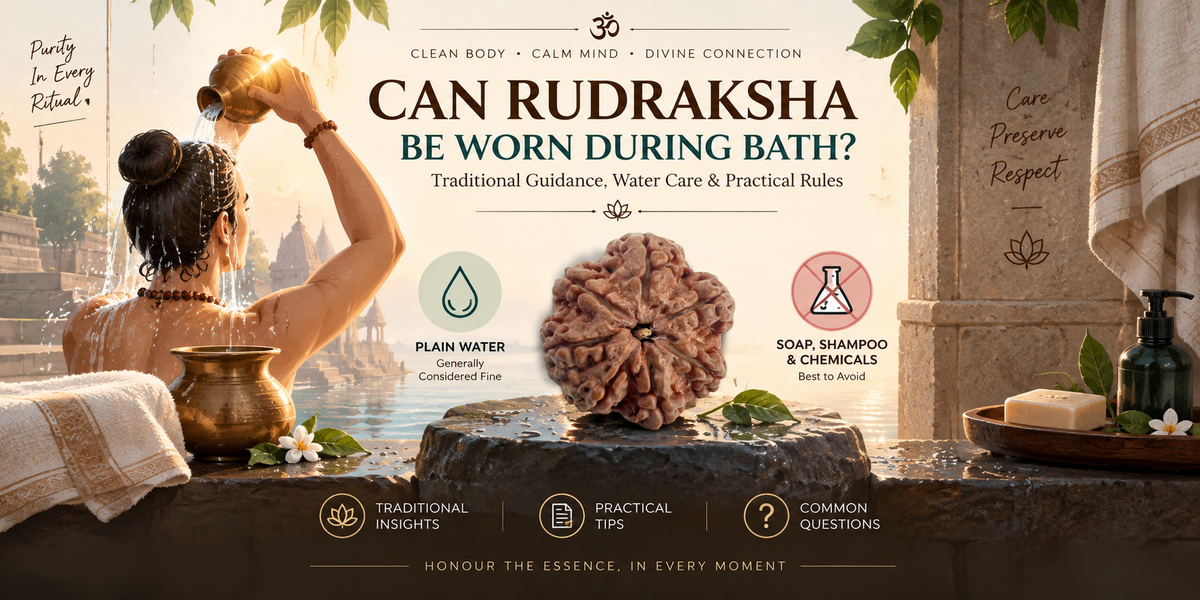
Yes, in traditions that permit it, Rudraksha may be worn during a bath with plain, cool water. This should not be understood as permission to expose every bead, mala or pendant to all bathing products.
For a normal shower involving soap, shampoo or body wash, removing it is the more practical choice. The same recommendation applies to warm or hot showers and swimming.
| Bathing situation | Mahadev Mala’s care recommendation |
|---|---|
| Brief contact with plain, cool water | Follow your tradition and dry the bead and thread afterwards |
| Soap, body wash, shampoo or conditioner | Remove the Rudraksha before bathing |
| Warm or hot shower, steam bath or hot tub | Remove it as a care precaution |
| Swimming in a pool or the sea | Remove it to avoid prolonged soaking and exposure to treated or salt water |
| Accidental water or shampoo contact | Gently remove any residue and allow the complete piece to dry |
For guidance beyond bathing, read our [Rudraksha Wearing Rules: Dos and Don’ts].
What Does the Rudraksha Jabala Upanishad Say?
The Rudraksha Jabala Upanishad describes Rudraksha wearing as part of devotional life. It includes instructions about wearing beads on different parts of the body and calls for continued wearing, including while sleeping and eating.
This provides a scriptural basis for the importance given to regular Rudraksha wearing in Shaiva practice.
However, a passage about continuous wearing should not be turned into a specific instruction about modern shampoo, shower temperature or jewellery fittings. Those details require separate care guidance.
Three kinds of guidance may therefore apply:
-
Scriptural teachings: What the text says about Rudraksha and its devotional use.
-
Lineage or family traditions: The wearing and purification practices taught by your Guru, sampradaya or household.
-
Physical product care: How to look after the natural bead, thread and setting.
If your Rudraksha is part of an initiated sadhana or a vow with particular wearing instructions, consult your Guru about bathing and temporary removal.
Is Plain Water Safe for Rudraksha?
Brief contact with clean water is different from leaving a Rudraksha soaking for a long time. Some traditions permit plain-water bathing while wearing it, but that does not make the complete piece waterproof.
A pendant may have metal caps, a bracelet may use elastic, and a mala may contain many knots and lengths of thread. These components also need to dry.
If your Rudraksha gets wet:
-
Gently wipe away excess water with a soft, clean cloth.
-
Leave it in a ventilated place to dry.
-
Check that the thread and knots are dry before storing it.
-
Avoid closing a damp bead or mala inside a box or pouch.
For everyday cleaning, avoid unnecessary soaking. Follow any specific care instructions supplied with your bead or setting.
Why Remove Rudraksha Before Using Soap or Shampoo?
Soap, shampoo and conditioner can collect in the bead’s grooves and around knots or fittings. Taking your Rudraksha off before bathing helps avoid that contact.
Hair washing can expose a pendant even when it hangs below the neck, because shampoo and conditioner may run over it.
The bead is also only one part of the piece. Cotton thread, silk thread, elastic, plated components and metal settings may have different care requirements. A routine that seems harmless to the bead may not suit its stringing or mounting.
Mahadev Mala recommends removing Rudraksha before using toiletries or taking a warm or hot shower. This is a practical care recommendation, rather than a claim that a particular water temperature has a universal spiritual meaning.
Does the Advice Change for a Mala, Bracelet or Silver-Capped Bead?
The general recommendation stays the same, but there are a few construction details to consider.
Rudraksha Mala
A mala has several beads, knots and sections of thread to dry. If it becomes wet, check between the beads and around the knots before putting it away.
A japa mala can be kept separately in a clean place during bathing, ready for use in prayer afterwards.
Rudraksha Bracelet
A bracelet is more likely to come into contact with hand soap during the day. Avoid allowing lather to remain around the beads, elastic or spacers.
After an accidental splash, wipe it gently and let it dry. Check the elastic and fittings periodically, especially if the bracelet is worn daily.
Silver-Capped or Plated Rudraksha
A mounted Rudraksha needs care for both the bead and its setting. A metal cap does not make the whole piece waterproof.
Remove it before bathing. Avoid applying metal polish or jewellery cleaner to the bead unless the maker has confirmed that the method is suitable for the complete piece.
Can Rudraksha Be Worn in a Swimming Pool or the Sea?
Mahadev Mala recommends removing Rudraksha before swimming.
Pool water is treated, while seawater contains salt. Swimming also involves longer water exposure than a brief rinse and may put strain on a thread, clasp or bracelet.
Keep your Rudraksha in a secure, dry place before entering the water. The same precaution applies to hot tubs and steam baths.
This advice concerns care of the bead and its setting. It should not be presented as a declaration that the sea or pool makes Rudraksha spiritually impure.
Does Rudraksha Become Impure in the Bathroom?
Bathroom customs differ between families and spiritual lineages. Some wearers remove sacred beads before entering, while others follow continuous-wearing practices.
Where your Guru, sampradaya or family has a specific rule, follow that guidance for your own observance. A practice followed in one household should not automatically be stated as a rule for everyone.
Ritual cleanliness and physical cleanliness also address different concerns. Questions about shuddhi belong to your spiritual practice. Soap residue, damp thread and a loose setting are matters of maintenance.
For an everyday bath, removing the Rudraksha keeps it away from toiletries and gives you a consistent care routine.
Where Should You Keep Rudraksha While Bathing?
Choose a clean, dry place away from splashing water and toiletries. A dedicated tray, a clean cloth or a box near your prayer area can work well.
Avoid leaving it on a wet bathroom counter or beside products that may spill. If the Rudraksha is already damp, allow it to dry before closing it inside a container.
After bathing, dry yourself before wearing it again. If you apply lotion or perfume, avoid direct contact between those products and the bead.
Do You Need to Purify Rudraksha Again After Every Bath?
Temporary removal for bathing is different from wearing Rudraksha for the first time.
For ordinary daily wear, Mahadev Mala does not prescribe repeating an elaborate first-wearing ceremony after every bath. If your Guru or family tradition gives you a particular purification or wearing practice, continue following it.
You may remember Lord Shiva and chant:
ॐ नमः शिवाय — Om Namah Shivaya
This is a widely recited Shiva mantra. Your practice may also include a Mukhi-specific Beej Mantra or a mantra received from your Guru.
Drying and inspecting the bead are care steps. Prayer, mantra and ritual preparation belong to the devotional practice you follow.
What If You Accidentally Bathed With Rudraksha?
One accidental shower does not automatically mean the Rudraksha must be discarded.
If only plain water touched it, wipe away excess moisture and let it dry. If soap or shampoo is present, gently rinse away the residue with clean, cool water without leaving the bead soaking.
Check the complete piece before wearing it again:
-
Look for visible cracks or damage to the bead.
-
Check that the thread and knots are secure.
-
Inspect the elastic, clasp and setting for looseness.
-
Allow the bead and its stringing to dry properly.
If you notice damage or a loose mounting, have it checked before continuing to wear it.
Should You Apply Oil Afterwards?
Do not automatically apply oil whenever the Rudraksha gets wet.
Conditioning methods differ, and a method intended for loose beads may not suit a mounted pendant or elastic bracelet. Follow the maintenance instructions supplied for your particular piece.
Avoid experimenting with household oils, chemical cleaners or polishing products.
Are Bathing Rules Different for Women or Different Mukhis?
The physical-care advice is the same for women and men: keep toiletries away from the bead and remove it before warm or hot showers and swimming.
Likewise, a 5 Mukhi, 6 Mukhi or another natural Rudraksha does not need a different bathing rule simply because its traditional association is different.
What may change the care requirements is the condition and construction of the piece—its thread, mounting, finish or existing damage. Spiritual wearing disciplines may also vary according to the tradition being followed.
Authenticity, Certification and Care
Before focusing on wearing rules, understand what you have purchased. Check the stated Mukhi, origin, natural formation and supporting documentation.
Colour, price and popular home water tests do not conclusively establish authenticity. Read our [Original Rudraksha: Real vs Fake Guide] for a closer look at these checks.
Every Rudraksha product from Mahadev Mala comes with an independent laboratory certificate. An X-Ray report is available separately as an optional paid add-on.
A laboratory certificate records the laboratory’s findings about the examined Rudraksha. An X-Ray provides a view of its internal structure. Neither should be understood as a guarantee that the bead or setting can withstand soap, heat or prolonged soaking.
Frequently Asked Questions
Can I wear Rudraksha while bathing every day?
Some traditions permit it during a plain, cool-water bath. For a daily shower with toiletries or warm water, Mahadev Mala recommends removing it first.
Does Rudraksha have to stay completely dry?
Brief clean-water contact is permitted in some traditions. If it becomes wet, dry the bead, thread and knots before storing it. Avoid unnecessary soaking.
Can I bathe with Rudraksha if I use herbal soap?
“Herbal” does not by itself establish that a cleanser is suitable for the bead or setting. For everyday care, remove Rudraksha before using soap, shampoo or body wash.
What should I do if shampoo touches it?
Gently rinse away the residue with clean, cool water, wipe off excess moisture and allow the piece to dry. Check the thread and fittings before wearing it again.
Does removing Rudraksha for bathing interrupt my spiritual practice?
Temporary removal for care can be part of an everyday wearing routine. If you follow an initiated practice or vow with specific wearing instructions, ask your Guru how to handle bathing.
Must I chant a mantra before putting it back on?
Follow your personal or prescribed practice. You may chant Om Namah Shivaya, but this guide does not prescribe a compulsory mantra count after every bath.
Can women wear Rudraksha during a plain-water bath?
The physical-care advice is the same for women and men. Whether you keep it on during bathing should follow your own tradition and the care requirements of the piece.
Does an expensive Rudraksha need a different bathing rule?
A higher price does not make a natural bead waterproof. Follow the care instructions for the bead and setting, regardless of Mukhi or price.
Mahadev Mala’s Recommendation for Daily Wear
Remove your Rudraksha before bathing with toiletries, taking a warm or hot shower, or swimming. Keep it somewhere clean and dry, then wear it again after bathing.
If your tradition permits a plain, cool-water bath while wearing Rudraksha, dry the complete piece afterwards. Continue your prescribed prayer and wearing practices while giving the bead the care it needs.
Disclaimer: Rudraksha is a natural spiritual product and an article of faith within Hindu and Vedic traditions. Spiritual associations described in this article are based on traditional beliefs and should not be treated as scientifically proven medical effects. Rudraksha does not diagnose, treat, cure or prevent disease, and no specific result is guaranteed. Practices may vary between gurus, families and spiritual lineages.