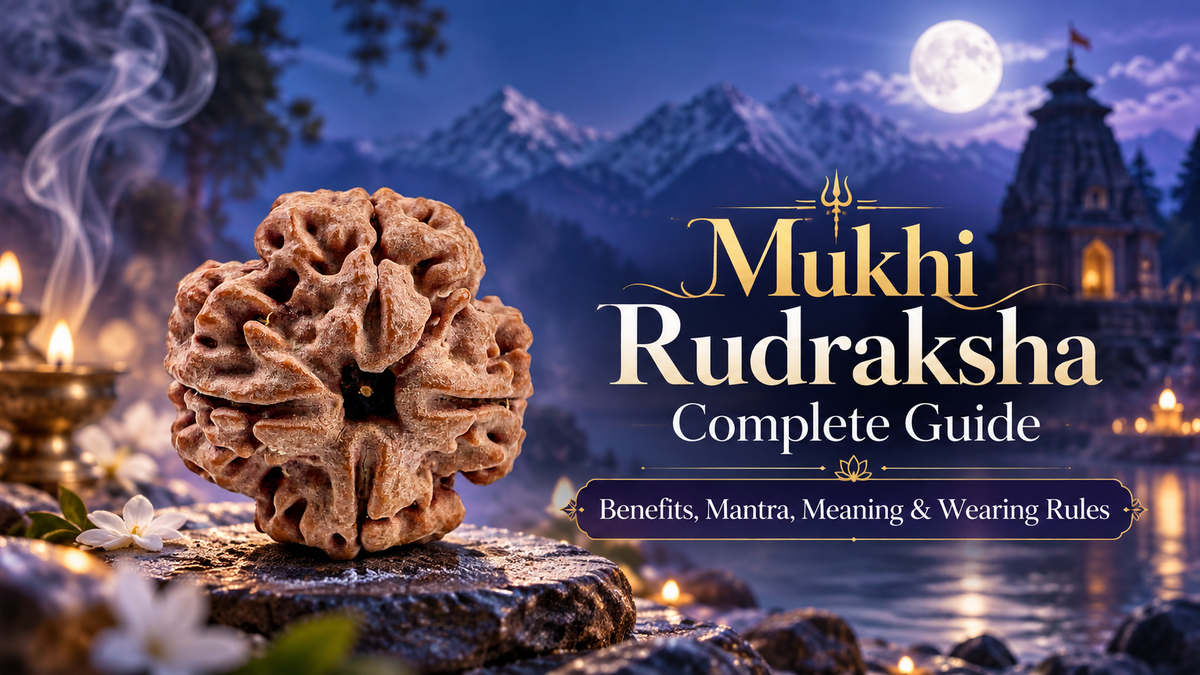
3 Mukhi Rudraksha Complete Guide – Benefits, Mantra, Meaning & Wearing Rules
A 3 Mukhi Rudraksha is traditionally associated with Agni Dev, the sacred fire. This connection gives the bead its best-known symbolism: transformation, courage, renewed confidence and the strength to move forward.
Its three natural faces are also interpreted in some traditions as representing Brahma, Vishnu and Mahesh (Shiva) — creation, preservation and transformation. In commonly followed Rudraksha astrology, 3 Mukhi is associated with Mangal (Mars), which is traditionally linked with courage, initiative, energy and decisive action.
For someone going through a period of change, trying to rebuild confidence or simply wanting to leave old hesitation behind, the traditional meaning of 3 Mukhi may feel especially relevant.
This guide explains its meaning, traditional benefits, mantra, Mars connection, who may wear it, how to wear it, Nepali vs Indonesian options, authenticity, certification, X-Ray and practical care.
3 Mukhi Rudraksha at a Glance
| Feature | Traditional & Practical Details |
|---|---|
| Mukhi | 3 naturally formed faces |
| Also called | Teen Mukhi / Trimukhi Rudraksha |
| Primary association | Agni Dev |
| Additional symbolism | Brahma, Vishnu and Mahesh |
| Planetary association | Mars / Mangal |
| Rashis commonly linked through Mars | Mesh (Aries) and Vrishchik (Scorpio) |
| Traditional themes | Transformation, courage, confidence, renewal |
| Beej Mantra | ॐ क्लीं नमः — Om Kleem Namah |
| Common wearing format | Single bead / pendant |
| Japa format | 108+1 Rudraksha Mala |
| Common origin options | Nepal and Indonesia |
What Is a 3 Mukhi Rudraksha?
A 3 Mukhi Rudraksha is a natural Rudraksha seed with three naturally formed Mukhi divisions running along the bead.
It is also commonly called:
- Teen Mukhi Rudraksha
- Three Mukhi Rudraksha
- Trimukhi Rudraksha
The Mukhi count is part of the bead's natural structure. A genuine 3 Mukhi should show three natural divisions rather than grooves added later to imitate another bead.
If you are still learning how natural Rudraksha differs from an altered or artificial bead, read our Original Rudraksha Kaise Pehchane? Real vs Fake Guide.
Why Is 3 Mukhi Rudraksha Associated With Agni Dev?
The central traditional association of 3 Mukhi Rudraksha is Agni, the sacred fire.
Fire represents change. What enters it does not remain in the same form, which is why Agni is often connected with purification, renewal and the courage to begin again.
In the context of 3 Mukhi, this symbolism is commonly associated with:
- moving beyond old hesitation
- beginning a new phase with clearer intention
- rebuilding confidence
- developing courage
- turning intention into action
Traditional descriptions sometimes use expressions such as “burning past karma.” Rather than reading that as a guaranteed literal result, it is better understood within the spiritual symbolism of Agni — leaving behind the weight of the past and moving forward with greater awareness.
Brahma, Vishnu and Mahesh: The Three-Fold Symbolism
The three faces of 3 Mukhi are also interpreted in some traditions through the divine trinity:
- Brahma — creation
- Vishnu — preservation
- Mahesh / Shiva — transformation
This gives 3 Mukhi another layer of meaning. Life constantly moves through beginnings, continuity and change, and the three faces are often understood through that cycle.
Traditional Benefits of 3 Mukhi Rudraksha
A Fresh Start and Transformation
3 Mukhi is often chosen when someone wants to begin again with a clearer mindset.
That may be during:
- a personal transition
- a new discipline or spiritual routine
- a change in career or direction
- a period of renewed motivation
- an effort to move beyond old hesitation
Its association with Agni makes renewal one of the strongest themes connected with this Rudraksha.
Confidence and Courage
3 Mukhi is traditionally linked with confidence and inner strength.
Its Mars association adds themes such as:
- courage
- initiative
- determination
- persistence
- decisive action
Someone who knows what needs to be done but often holds back because of hesitation may find this symbolism particularly meaningful.
Moving Beyond Regret
Another traditional theme around 3 Mukhi is the ability to stop carrying old mistakes into every new decision.
In a spiritual practice, the bead can serve as a reminder to learn from what has happened without allowing regret to control what comes next.
Energy and Initiative
Because Mangal is traditionally associated with energy and action, 3 Mukhi is also chosen by people who want to become more consistent, disciplined or decisive in the way they approach their goals.
3 Mukhi Rudraksha and Mars (Mangal)
In a commonly followed Rudraksha-to-Graha mapping, 3 Mukhi is associated with Mars or Mangal.
Mars is traditionally linked with:
- courage
- initiative
- energy
- determination
- assertiveness
- decisive action
This is why 3 Mukhi often appears in Mars-related Rudraksha guidance.
If you prefer choosing Rudraksha according to planetary association, read our Grah Ke Anusar Kaunsa Rudraksha Pehne? Navagraha Guide.
Is 3 Mukhi Suitable for Mesh and Vrishchik Rashi?
In Vedic astrology, Mesh (Aries) and Vrishchik (Scorpio) are traditionally ruled by Mars.
Because 3 Mukhi is associated with Mangal, it commonly appears in general guidance for these two Rashis.
That does not mean only Aries or Scorpio can wear it. Someone may choose 3 Mukhi because of its Agni symbolism, confidence-related themes or devotional significance regardless of Rashi.
For broader sign-wise guidance, see our Rudraksha for Each Rashi: Complete Guide to All 12 Signs.
Who Can Wear 3 Mukhi Rudraksha?
Men, women and beginners may wear 3 Mukhi Rudraksha.
It may be meaningful for someone drawn towards:
- transformation
- a fresh start
- confidence
- courage
- renewed motivation
- moving beyond hesitation
- Agni devotion
- Mars-related traditional guidance
Students may consider it when confidence, motivation or hesitation after past setbacks is their main concern.
Professionals and business owners may feel drawn to its traditional themes of initiative, confidence and decisive action, especially during a new phase of work or responsibility.
Devotees may choose it simply because of its association with Agni Dev, Shiva-centred spiritual practice or the symbolism of transformation.
There is no need to wait for a crisis before wearing Rudraksha. It can be part of regular spiritual practice as well.
Can Women Wear 3 Mukhi Rudraksha?
Yes. Women and men both wear Rudraksha in devotional practice.
Family customs, Gurus and spiritual lineages may follow different disciplines, but one local custom should not automatically be treated as a universal rule.
For a detailed discussion, read Can Women Wear Rudraksha? Rules, Myths & Traditions.
What Is the Mantra for 3 Mukhi Rudraksha?
The Beej Mantra followed by Mahadev Mala for 3 Mukhi Rudraksha is:
ॐ क्लीं नमः
Om Kleem Namah
For general Shiva-centred devotion, ॐ नमः शिवाय — Om Namah Shivaya is also widely used.
If your Guru or spiritual lineage has given you a specific mantra, follow that practice.
Which Day Should You Wear 3 Mukhi Rudraksha?
Monday is commonly chosen for Shiva-centred Rudraksha practice.
Because 3 Mukhi is associated with Mars, some people following a Graha-based method may choose Tuesday.
A simple way to decide is:
- follow your Guru or lineage if you have one
- follow the Mars-based method if you are wearing it specifically for Mangal
- otherwise, a simple Shiva-centred Monday practice is suitable
How to Wear 3 Mukhi Rudraksha for the First Time
You do not need an elaborate ritual to begin.
1. Inspect the Rudraksha
Check that the bead, thread, chain or pendant setting is secure.
2. Clean It Gently
Rinse it gently with clean water if needed and dry it properly.
Avoid soap, shampoo and harsh chemical cleaners.
3. Place It in Your Puja Space
Keep the Rudraksha respectfully before Lord Shiva or in your usual puja area.
4. Offer a Simple Prayer
Offer your prayer according to the tradition you follow. You may remember Lord Shiva and Agni Dev.
5. Chant the Mantra
Chant:
ॐ क्लीं नमः — Om Kleem Namah
You may chant it 11 or 108 times according to your practice.
6. Wear It
A 3 Mukhi Rudraksha may be worn in a clean cotton or silk thread, a suitable cord or a secure silver or gold setting.
The important part is not making the ritual unnecessarily complicated. Begin respectfully and follow the practice consistently.
Single 3 Mukhi Bead or 3 Mukhi Japa Mala?
The better option depends on how you intend to use the Rudraksha.
Single Nepali 3 Mukhi Rudraksha
A single bead is a practical choice when you want to wear 3 Mukhi itself for its traditional Agni, transformation or Mars association.
You can view the Natural Certified Nepali 3 Mukhi Rudraksha.
3 Mukhi Indonesian Japa Mala
If mantra japa is your main purpose, a full mala may be more suitable.
Mahadev Mala's 3 Mukhi Indonesian Rudraksha Japa Mala – 108+1 Beads uses smaller, lighter Indonesian Rudraksha, making the complete mala easier to handle during regular japa.
For a broader explanation of the 108+1 structure, read Rudraksha Mala Guide: 108+1 Beads, Benefits & How to Use.
Nepali vs Indonesian 3 Mukhi: Which One Should You Choose?
Both can be natural Rudraksha. The main difference is physical form and practical use.
Choose a Nepali 3 Mukhi if:
- you want a larger, more prominent single bead
- you prefer deeper natural texture
- you want the Rudraksha to remain visually noticeable as a pendant
- you like the feel of a more substantial bead
Choose an Indonesian 3 Mukhi format if:
- you want a lighter mala
- mantra japa is your main purpose
- you need 108+1 beads in one construction
- smaller beads feel more comfortable
Neither origin should automatically be described as spiritually superior.
For a detailed comparison, read Nepali vs Indonesian Rudraksha: Difference, Size, Quality & Which to Choose.
Does the Size of 3 Mukhi Rudraksha Matter?
Size matters mainly for practical reasons such as:
- appearance
- weight
- comfort
- rarity
- price
A larger Nepali 3 Mukhi may look more prominent as a pendant, while a smaller bead can be more discreet and comfortable for regular wear.
When comparing genuine beads, pay attention to natural formation, condition, origin, comfort and verification, not just diameter.
For a complete explanation, read Rudraksha Size Guide: Does Size Really Matter?.
How to Identify an Original 3 Mukhi Rudraksha
No single home test is enough to authenticate every Rudraksha.
A better approach is to look at several things together.
Check the Three Natural Faces
A 3 Mukhi should show three naturally formed longitudinal divisions.
The lines should appear to be part of the natural bead structure rather than freshly carved grooves.
Expect Natural Variation
A genuine Rudraksha does not need to be perfectly round or symmetrical.
Differences in shape, colour, texture, size and surface pattern are normal.
Look for Signs of Alteration
Be cautious if you notice:
- carved-looking lines
- filled or patched areas
- glued portions
- suspicious cuts
- visible artificial surface work
Do Not Rely on Home Tests Alone
Floating or sinking in water, copper coin tests and similar shortcuts should not be treated as final proof of authenticity.
If you are buying online, proper product information, natural formation and independent examination are much more useful.
Read our complete Original Rudraksha Kaise Pehchane? Real vs Fake Guide before relying on common home-test myths.
Laboratory Certificate vs X-Ray
A laboratory certificate and an X-Ray are not the same thing.
Laboratory Certificate
A laboratory certificate records the findings of the issuing laboratory according to its examination methods and scope.
Mahadev Mala states that its Rudraksha products include independent laboratory certification.
X-Ray
An X-Ray can provide additional information about the internal structure of a Rudraksha without cutting the bead open.
It is an additional form of examination rather than another name for a standard certificate.
You can read Mahadev Mala's current verification process on the Certification & Authenticity page.
Practical Care and Maintenance
Rudraksha is a natural seed, so sensible physical care matters.
Avoid Harsh Chemicals
Try to keep the bead away from repeated direct exposure to:
- shampoo
- soap
- perfume
- chlorine
- detergents
- strong cosmetics
If It Gets Wet
If the bead gets wet, dry it properly before storing it.
Repeated exposure to soap, shampoo or prolonged moisture is different from occasional contact with clean water.
Sleeping With 3 Mukhi
Some people continue wearing Rudraksha while sleeping, while others remove it at night.
From a practical care point of view, removing a larger pendant before sleep can reduce pressure on the bead, thread or metal setting.
For the full discussion, read Can We Wear Rudraksha While Sleeping? Rules & Traditions.
Clean It Gently
For ordinary surface dirt, wipe the bead gently with a soft, clean cloth.
If the grooves need attention, use a soft brush carefully rather than scraping the natural surface.
For more day-to-day guidance, read Rudraksha Wearing Rules: Do's & Don'ts for Daily Wear.
What to Check Before Buying 3 Mukhi Rudraksha Online
Before placing an order, look at a few practical details.
Natural Mukhi Formation
The product should clearly show or describe a naturally formed 3 Mukhi structure.
Origin
Check whether the bead is Nepali, Indonesian or from another origin.
Size and Format
Understand exactly what you are buying:
- single bead
- pendant
- bracelet
- mala
- 108+1 japa mala
Certification
Check whether independent laboratory certification is included and what the report covers.
X-Ray Availability
If you want additional internal examination, check whether an X-Ray option is available for that product.
Clear Seller Information
A trustworthy listing should clearly explain the product, origin, size, certification and what is included with the order.
Choosing the Right 3 Mukhi Rudraksha
The best format depends on how you intend to use it.
If you want a prominent Rudraksha for wearing as a pendant, a natural Nepali 3 Mukhi is a practical choice.
If mantra japa is your main purpose, a lighter Indonesian 108+1 mala may suit the practice better.
You can explore:
Choose according to your purpose, comfort and trust in the authenticity of the bead rather than simply choosing the largest or most expensive option.
Frequently Asked Questions
What is a 3 Mukhi Rudraksha?
A 3 Mukhi Rudraksha is a naturally formed Rudraksha with three Mukhi divisions. It is also commonly called Teen Mukhi or Trimukhi Rudraksha.
Which God is associated with 3 Mukhi Rudraksha?
3 Mukhi is traditionally associated with Agni Dev. Its three faces are also interpreted in some traditions through Brahma, Vishnu and Mahesh.
Which planet is associated with 3 Mukhi Rudraksha?
3 Mukhi is commonly associated with Mars or Mangal in Rudraksha astrology.
What are the traditional benefits of 3 Mukhi Rudraksha?
Its traditional themes include transformation, courage, confidence, initiative, renewal and moving beyond old hesitation.
What is the mantra for 3 Mukhi Rudraksha?
The commonly followed Beej Mantra is:
ॐ क्लीं नमः — Om Kleem Namah
Which day should I wear 3 Mukhi Rudraksha?
Monday is commonly chosen for Shiva-centred practice. Some Mars-based traditions prefer Tuesday.
Is 3 Mukhi Rudraksha suitable for Aries and Scorpio?
It commonly appears in guidance for Mesh (Aries) and Vrishchik (Scorpio) because both are traditionally associated with Mars. A complete Kundli-based recommendation can be more individual.
Can women wear 3 Mukhi Rudraksha?
Yes. Women may wear 3 Mukhi Rudraksha. Specific family or lineage customs can differ.
Can beginners wear 3 Mukhi Rudraksha?
Yes. A beginner may wear it if its traditional meaning matches their intention.
Is 3 Mukhi Rudraksha good for confidence?
Confidence and courage are among the traditional themes associated with 3 Mukhi, particularly through its Agni and Mars symbolism.
Can students wear 3 Mukhi Rudraksha?
Yes. Students may wear it, especially when confidence, motivation or hesitation after previous setbacks is their main concern.
Is Nepali 3 Mukhi better than Indonesian?
Neither origin should automatically be treated as spiritually superior. Nepali Rudraksha is generally larger and more deeply textured, while Indonesian Rudraksha is usually smaller and especially practical for full japa malas.
Does a bigger 3 Mukhi Rudraksha work better?
A larger bead can be rarer, heavier and more visually prominent, but size alone should not be treated as proof of stronger spiritual results.
Can I wear 3 Mukhi with 5 Mukhi Rudraksha?
Yes. 3 Mukhi and 5 Mukhi are used together in some traditional Rudraksha combinations. The choice should depend on the purpose of the combination rather than the assumption that more beads automatically mean better results.
Does 3 Mukhi Rudraksha need a certificate?
When buying online, independent laboratory documentation is useful because it provides examination information about the bead being sold.
Is X-Ray necessary for 3 Mukhi Rudraksha?
Not always. X-Ray is an optional additional examination that can provide more information about the internal structure.
Can I wear 3 Mukhi Rudraksha every day?
Yes. It may be worn as part of regular devotional practice with sensible physical care.
Editorial Note
This article is intended to explain traditional Rudraksha beliefs, commonly followed spiritual practices and practical buying considerations in clear language. Customs can vary between families, Gurus and spiritual lineages.
Disclaimer
Rudraksha is a natural spiritual product and an article of faith within Hindu and Vedic traditions. Spiritual and astrological associations described here are based on traditional beliefs and should not be treated as guaranteed medical, psychological, financial or personal outcomes. Laboratory reports and X-Ray examinations should be understood according to the scope and methods of the issuing laboratory.